The Best Starter Ship in Star Citizen (and Which Pack to Buy)
Aurora Mk II, Mustang Alpha or Avenger Titan? What each starter pack actually gets you, and why the first one you buy is never the last.
The short answer
Buy the Aegis Avenger Titan pack if you can spend around $75. It is the ship most veterans point new players toward, and the reason is not sentiment: 8 SCU of cargo, a bed, and a Size 4 nose hardpoint make actual gameplay open up on day one instead of week three.
If you want the cheapest possible way in, buy the entry pack built around the RSI Aurora Mk II, which sits in the $45–$60 range depending on the promotion running that week. It is a real ship, not a demo.
Either way you get the same permanent access to the game, and neither choice traps you. Ship upgrades let you pay only the difference later, and most ships in the game can simply be bought with credits you earn in game. This page explains all of that. For the full cost breakdown — subscriptions, optional spending, what the game actually costs over time — see how much Star Citizen costs.
Game package vs. standalone ship: the mistake that costs $60
Two very different products on the RSI pledge store both show a nice picture of a spaceship. Confusing them is the single most expensive beginner error, and people make it every week.
A game package contains permanent access to the game, one ship, a hangar and a small amount of starting UEC. It is the only thing you need to buy. A standalone ship is a hull sold on its own: it adds a ship to an account that already has access, and grants no access by itself. Buy one of those first and you will have to pay a second time to actually play.
This matters twice over here. The 50,000 UEC referral bonus is released when you buy your first game package — a free account alone does not trigger it. And the referral code itself can only be attached when you create the account or within the following 24 hours. There is no second chance and RSI support cannot apply one retroactively, so if you are going to make an account at all, make it with a code.
Star Citizen Aurora vs Mustang: the comparison that matters
This is the classic new-player question, and it deserves a straight answer rather than a spec dump. First, some context, because a lot of the advice you will find on YouTube and Reddit is now out of date.
Cloud Imperium pulled the old Aurora MR pack from the store in late May 2025, later explaining on a Star Citizen Live episode that the ship no longer met current standards. RSI then launched the completely rebuilt Aurora Mk II on March 25, 2026, and the original Mk I entered a six-month sunset window running through September 30, 2026 — it stays flyable, repairable and supported, it simply is not what you will be sold anymore. The Mustang Alpha pack, for its part, has rotated in and out of the store more than once. Check the official store on the day you buy.
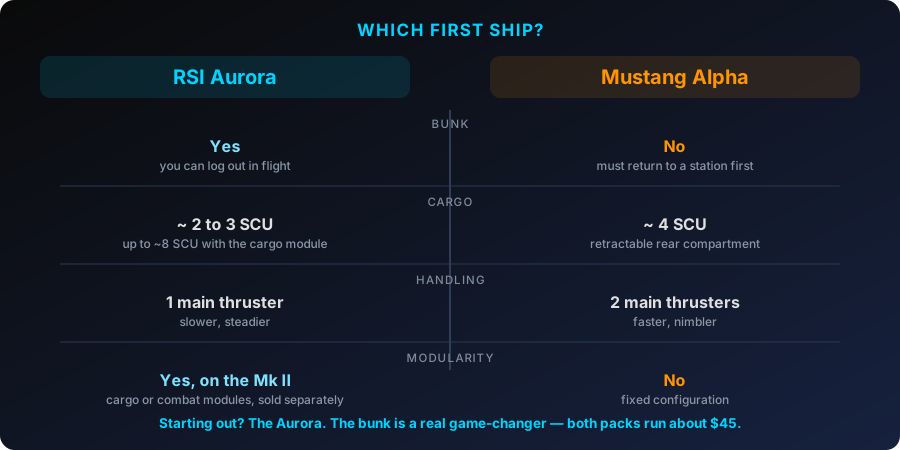
| Spec | RSI Aurora Mk II | Consolidated Outland Mustang Alpha |
|---|---|---|
| Crew | 1 pilot | 1 pilot |
| Cargo | Roughly 2 SCU in the bare hull; 8 SCU with the TS cargo module fitted | 4 SCU in a drop-down compartment at the rear |
| Bed | Yes — log out anywhere, resume in place | No |
| Main thrusters | One | Two |
| Handling | Slower, steadier, more forgiving of mistakes | Quicker and sharper, less forgiving |
| Guns | Four Size 2 mounts, plus missile racks | Light Size 2 class armament |
| Modularity | Yes — TS cargo module (+6 SCU) or DM combat module (eight Size 2 missiles and a third shield generator), sold separately | None |
| Pack price | Around $45–$60 depending on the promotion | Historically the same tier |
Why the bed is the most underrated line in that table
Nobody buys a spaceship for the mattress, which is exactly why this gets missed. In Star Citizen, a bed is a logout point. Lie down, quit the game, and you come back at the same spot with the same ship. Without a bed you have two options: fly all the way back to a station before you log off, or log out somewhere you do not control and hope for the best.
You will understand the moment it happens to you — twenty minutes out at a remote outpost, hold full, and real life calls. The Aurora also gains genuine modularity with the Mk II: swapping between a cargo module and a combat module means one purchase does not lock you into a career you have not tried yet.
What the Mustang Alpha gives you back
Two main thrusters against the Aurora's one. It accelerates harder, repositions faster and feels more like a fighter in your hands, and its 4 SCU beats a bare, module-less Aurora Mk II. The tradeoffs are real too: it is thinner, it has no bed, and there is nothing to bolt onto it later. On short evening sessions you will not notice the missing bed. On a long haul, you will.
One tier up: the Avenger Titan, and why $30 more usually pays off
If your budget stretches another thirty dollars or so, the Aegis Avenger Titan has been the community's default recommendation for years. It typically sits around $70–$75 as a game package. What you get for the difference:
- 8 SCU of cargo, double the Mustang Alpha — the point where hauling and small-scale trading start to actually pay
- A bed and a stand-up interior, which matters more than it sounds when you are learning to move crates with the tractor beam tool
- A Size 4 nose hardpoint, shipped with a Size 3 Mantis GT-220 gatling, plus a Size 3 mount under each wing and two missile racks — genuinely rare firepower at this price, and it opens up bounty hunting
- An ejectable pilot seat, which is a nicer way to end a bad fight than the alternative
Here is the practical difference. With an entry pack you run package deliveries and the lowest bounty tiers. With a Titan you add bunker missions, mid-tier bounties and hauling contracts that are worth the fuel. That is roughly the gap between still doing the tutorial loop and actually playing the game.
CCU upgrades: why your first purchase is never wasted
The Cross-Chassis Upgrade, or CCU, is what makes this whole decision far lower-stakes than it feels. When you want a more expensive ship, you do not buy that ship — you buy the price difference. Moving from a $100 ship to a $150 ship costs $50. You purchase the upgrade in the store, then apply it from the My Hangar section of your RSI account: find the upgrade, click Apply Upgrade, pick the ship it should transform. Insurance level and limited items carry across.
Two rules to know. You can never downgrade to a cheaper ship — CIG built it that way on purpose. And a CCU changes the ship, not your game access, which stays attached to your account permanently either way.
Why you should not buy a big ship first
The concept art is gorgeous and it is tempting to think a $250 ship saves you time. It almost never does.
- You do not know what you like yet. Hauling, mining, salvage, combat, exploration and medical play nothing alike. Buying a mining ship before you have ever mined is a bet placed blind.
- Big ships fly badly alone. Many want a crew, and even solo-capable ones are slow to spool, slow to land and awkward in tight spaces — the exact conditions of your first week.
- Almost everything is purchasable in game. Ship shops like New Deal in Lorville and Astro Armada on ArcCorp sell hulls for aUEC you earn by playing. Paying cash is a shortcut, not a requirement.
- You can test-fly for free. Rental terminals at major spaceports rent ships for aUEC, and during the big in-game expos — Invictus Launch Week in May, IAE in November — most of the show floor is free to rent for a couple of days. Free Fly events do the same thing for people without a pack at all.
- The game is still in alpha. Balance shifts, ships get reworked, the persistent universe gets wiped periodically. Ships bought with real money survive that; your confidence in a $400 purchase might not.
- CCU exists. Starting small closes no doors, as covered above.
My personal guardrail, offered for whatever it is worth: no more than $100 on a first purchase. If you still want the big ship after a hundred hours, it will still be there, and you will know why you want it.
LTI insurance, demystified
LTI stands for Lifetime Insurance, and it comes up constantly in ship-buying discussions as though it were a decisive feature. For a new player, it is not.
What it does: covers replacement of the hull and its stock components, with no expiration date. What it does not do: cover your cargo, or the parts you bought and installed yourself — which, in this game, are often worth more than the hull. It cannot be bought separately, and it transfers through CCU upgrades.
Most importantly, during the alpha every ship already runs on a basic insurance that never expires and never charges you. You claim a destroyed ship at any ASOP terminal, wait out a timer that scales with ship size, and it comes back. Timed insurance and LTI only start to mean anything when the game leaves alpha.
My recommendation, stated plainly
I have backed this project since the 2012 Kickstarter and I have walked a lot of friends through their first purchase. Here is what I actually tell them:
- Tight budget, or just curious: the entry pack around $45–$60, currently built around the Aurora Mk II. The bed and the modules make it the best cheap ticket in years, and nothing about it feels like a punishment.
- Roughly $30 more available: the Avenger Titan. This is my answer for about nine people in ten. The cargo hold, the bed and that Size 4 nose gun make the game interesting far faster.
- Do not start above $125. Not because expensive ships are bad, but because you cannot yet tell which expensive ship you want.
- In every case: if a Free Fly event is running, create your account with the code first, fly for free, then decide. The code stays valid; your 24-hour window does not.
None of this is permanent anyway. Between CCU upgrades and in-game purchases, no starter pack locks you into anything. The one genuinely irreversible decision in this whole process is whether you attach a referral code before that first day is up. Once you are in, head over to the beginner's guide for your first few hours in the Verse.
Frequently asked questions
The Aegis Avenger Titan, for most people. It carries 8 SCU of cargo, has a bed, and mounts a Size 4 nose hardpoint, which is unusual at that price. If the extra thirty dollars is out of reach, the entry pack built around the RSI Aurora Mk II is a perfectly good way in — and you can upgrade to the Titan later for the price difference.
The Aurora, mainly because it has a bed and the Mustang Alpha does not. A bed is your logout point: you sleep, you quit, you wake up where you left off instead of flying all the way home. The Mustang is faster and more agile with two main thrusters against the Aurora's one, so pick it only if sharp handling matters more to you than sleeping in space.
Your first purchase has to be a game package. It includes permanent access to the game plus a ship and a hangar. A standalone ship only adds a hull to an account that already has access, so buying one first means paying twice. Check that the product page says the game is included before you check out.
No, not for a new player. Lifetime Insurance covers the hull and its stock components with no expiry date, but not cargo and not parts you bought and installed yourself. More importantly, every ship in the game currently runs on a basic insurance that never expires: you claim a destroyed ship at any ASOP terminal and wait out a short timer. Buy a pack for the ship, not for the LTI badge.
Yes, through a Cross-Chassis Upgrade (CCU). You pay only the difference between the ship you own and the one you want: going from a $100 ship to a $150 ship costs $50. You buy the upgrade in the store and apply it from the My Hangar section of your RSI account. The one hard rule is that you can never downgrade to a cheaper ship.
Yes. The 50,000 UEC bonus is released when you buy your first game package, whichever one it is, so the cheapest pack earns the same bonus as an expensive one. The condition is on the account, not the pack: the code has to be entered when you create the account or within 24 hours of signing up.